An Intro to the Digestive System
This is an interactive carrd made by Iman Lekić, its purpose is to teach what happens during the digestion, how it works and more.
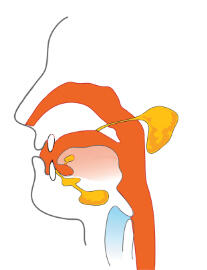
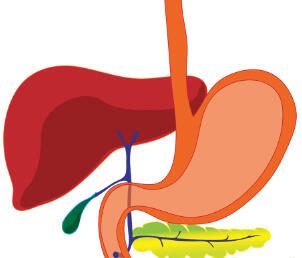
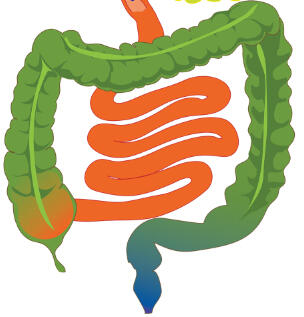
Before I get into anything, what exactly is digestion?
Digestion is the process of the food we eat which breaks down the nutritions like carbohydrates into glucose, fats into glycerol and fatty acids, and proteins into amino acids which is then easily absorbed by the organs in the digestive system.
Physical :
The digestion process starts in the mouth, and with the use of your jaw movements you break down the food into pieces with your teeth, while the tongue moves the food around.
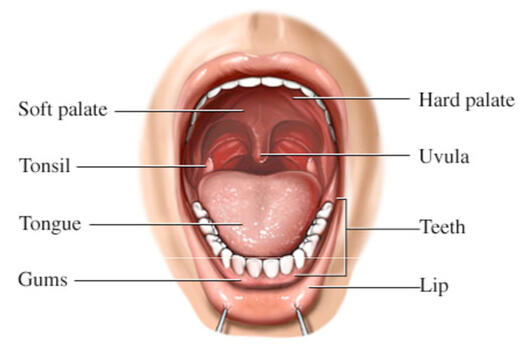
Chemical :
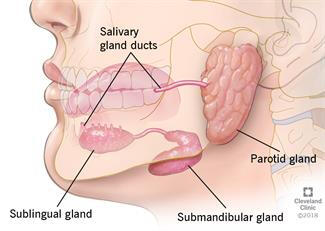
While chewing, the three salvary glands start to produce saliva. Saliva contains 99% water, mucus and amylase. Amylase is the chemical that starts the starch digestion.
(Fun fact: In 24 hours, a human would normally produce 1.5 litres of saliva.)
Epiglotis :
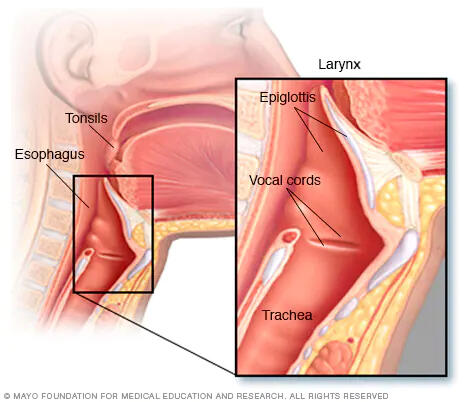
It is a lid that closes your air pipe while you swallow your food/drink so it passes to your esophagus safely without causing you to choke. You can swallow by will, but the epiglotis is not controllable by will.
Esophagus :
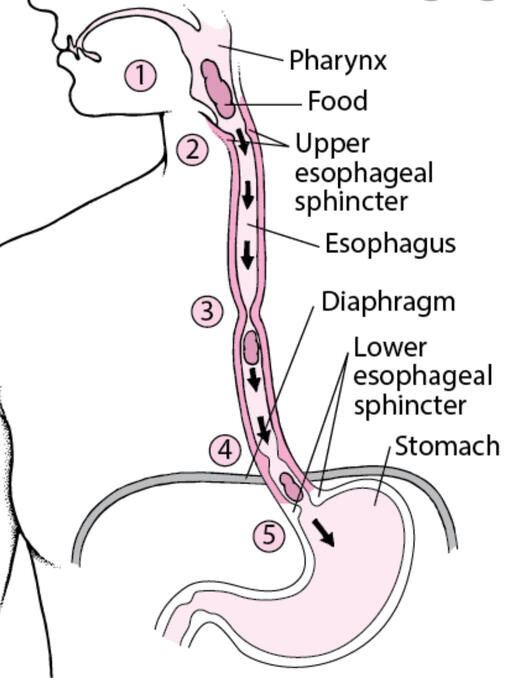
The esophagus is a a muscular tube which connects the throat to the stomach. It has two muscles, the upper esophageal sphincter (UES) and the lower esophageal sphincter (LES). UES muscles are at the top of the espoghagus while being under concious control, used when breathing, eating and vomiting. LES muscles are at the end of the esophagus where it meets the entrance to the stomach, when it is closed it prevents the acid in the stomach to travel backwards.
Stomach :
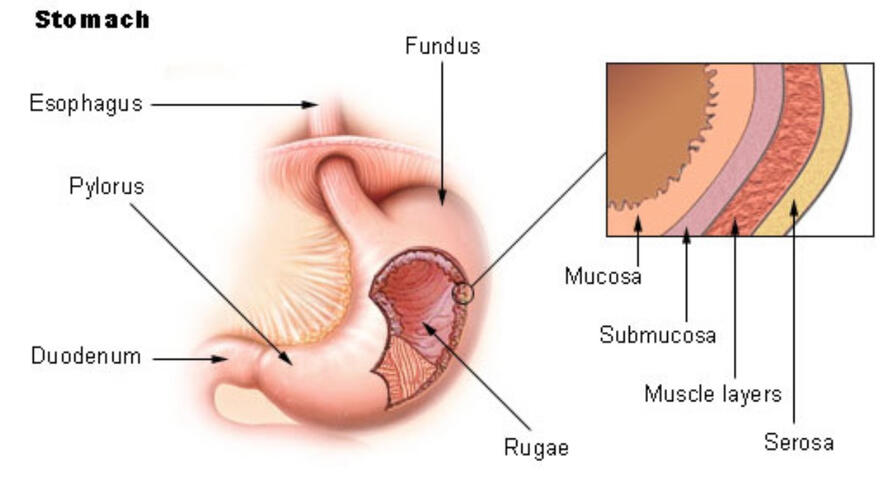
The stomach receives the food through the LES from the esophagus. The food enters from the stomachs top sphincter, and the hydrochloric acids starts to kill most of the bacterias and microorganisms found in the food. The stomachs inside walls are covered with folds of epithelial tissue and mucos that protects the stomachs cells. Chief cells produces pepsinogen which converts to pepsin by hydrochloric acid in the stomach. Parietal cells produce the hydrochloric acid in the stomach, allowing the pepsinogen to convert into pepsin. Pepsin is an enzyme that starts the breakdown of protein contained in the food. Other than the chemical breakdowns, the stomach churns to mix the food up. After these processes, the food gets sent to the duodenum (First part of the small intestine.)
Liver :
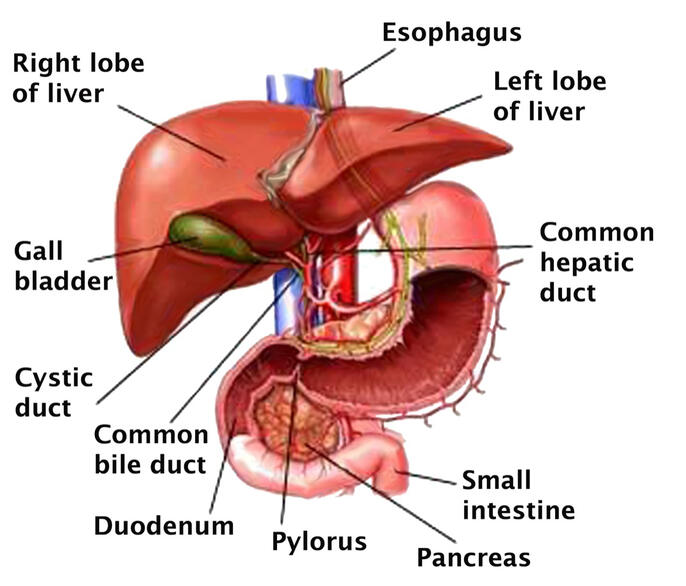
The liver contains two main lobes that involves many smaller lobules which are connected to small ducts, which are also connected to larger ducts. All of these form into a common hepatic duct which transports the bile made by the liver into the gallbladder and duodenum. This bile that the liver produced breaks down the fat, protein and carbohydrates in the food.
Gallbladder :
Some part of the bile from the liver is stored in the gallbladder, which is then concentrated and stored.
Pancreas :
The pancreas is an organ that have 2 main functions: exocrine and endocrine functions. Exocrine functions helps in the digestion process by secreting pancreatic juice into the duodenum through the pancreatic duct (neutralized hydrochloric acid.) Endocrine functions help regulate the sugar in your blood which is by producing the hormone insulin. It serves is purpose as a digestive system organ and a glandul.
Small Intestine :
The small intestine starts from the stomach and continues until the large intestine. It consists of 3 parts : duodenum, jejunum, and ileum. The duodenum is the shortest, where the preparation for the absorption through villi's begin. Small molecules that easily dissolve in water get absorbed by villi's that have capillaries, lacteals and epithelial cells. The jejunum is the middle area of the small intestine where past digested and small nutrients from the duodenum are absorbed. The ileum is the last part of the small intestine which absorbs everything that was not absorbed by the jejunum, as well as vitamin B-12 and bile salts.
(Fun fact : A small intestine is normally 6.5 meters/18 feet long.)

Large intestine :
The large intestine begins at the end of the small intestine (ileum) and ends at the anus. It has 4 parts: cecum, colon, rectum and anal canal. The digested food from the ileum passes through the cecum to the colon where water and unabsorbed nutritions get absorbed. The food waste turns into stool and passes through with muscle contractions towards the rectum.
Apendix, Rectum and Anus :
The appendix is a very thin tube that is in the beginning of the large intestine, which is filled with bacteria.
The rectum is the end of the large intestine and is connected to the anus, where the stool is held before it is passed out.
The anus is an circle shaped opening of the rectum, which lets the stool pass out the body.